
OnlyFans notifications are the main way the platform reminds you that a page exists, and they are also the main way it nudges you to spend. Most followers assume their budget depends on self-control. In practice, the number of prompts you receive each day shapes how often you open the app, and opening the app is the step that leads to spending.
The platform itself is built as a subscription service, not a browsing network. There is no public feed, no search directory, and no recommendation engine that surfaces new pages to you. That absence is deliberate.
Understanding the mechanics matters more than willpower. A ping is not neutral information. It is a prompt timed to a moment when you are likely to act, and each one carries a small cost in attention.
Why alerts feel urgent
Limited-time messages and promo pings are written to create a sense of scarcity. The wording implies a closing window, and the timer in your head starts running the moment you read it. In most cases the deadline is soft.
The pressure is a design choice, not a real constraint. Notifications are cheap to send, and creators are encouraged to send them because open rates are high. When a message says “last chance,” it is describing the end of one campaign rather than the end of your access to anything you already bought.
A practical tip: before reacting to any promo ping, wait ten minutes and reread it. If the offer still looks worth paying for after the urgency fades, it was a real preference. If it does not, the alert did the selling, not the page.
Monthly costs also tend to drift upward without a single large decision. Small unlocks add up faster than subscriptions because they are unbilled and easy to forget.
- Base subscriptions: paid pages typically run $4.99 to $15, averaging $5 to $10, with the platform range topping out at $49.99.
- Renewals: every active subscription renews automatically unless you cancel before the period ends.
- Pay-per-view unlocks: individual messages that unlock content for a one-time fee.
- Tips: voluntary payments that do not expire and are not tied to any content.
- Promotional first months: some pages drop below $4.99 for an intro period, then return to the standard rate.
Which notifications matter
Not every alert deserves the same treatment. Sorting them into groups makes the decision simpler, because the risk attached to each type is different. Some alerts protect your access, while others exist only to trigger a purchase.
Renewal reminders and account notices are functional. They tell you when money is about to move and when access will end. Promo pings and pay-per-view teasers are commercial, and they are the ones most likely to pull you into the app at a moment you did not plan.
Keep the small set that carries information and mute the rest. A short list is enough for most followers.
- Keep: renewal reminders, so you always know what is about to be charged.
- Keep: payment and security notices tied to your account.
- Keep: direct messages from pages you actively follow and read.
- Mute: promotional pings and discount blasts.
- Mute: new-post alerts for pages you check on your own schedule.
- Mute: pay-per-view teasers that arrive as push notifications.

The link between pings and unlocks
Many creators send a message notification that opens directly onto a pay-per-view offer. The alert itself is free to receive, but the screen behind it is not. Opening the app at that exact moment removes the gap between seeing and deciding, and that gap is where most budget discipline lives.
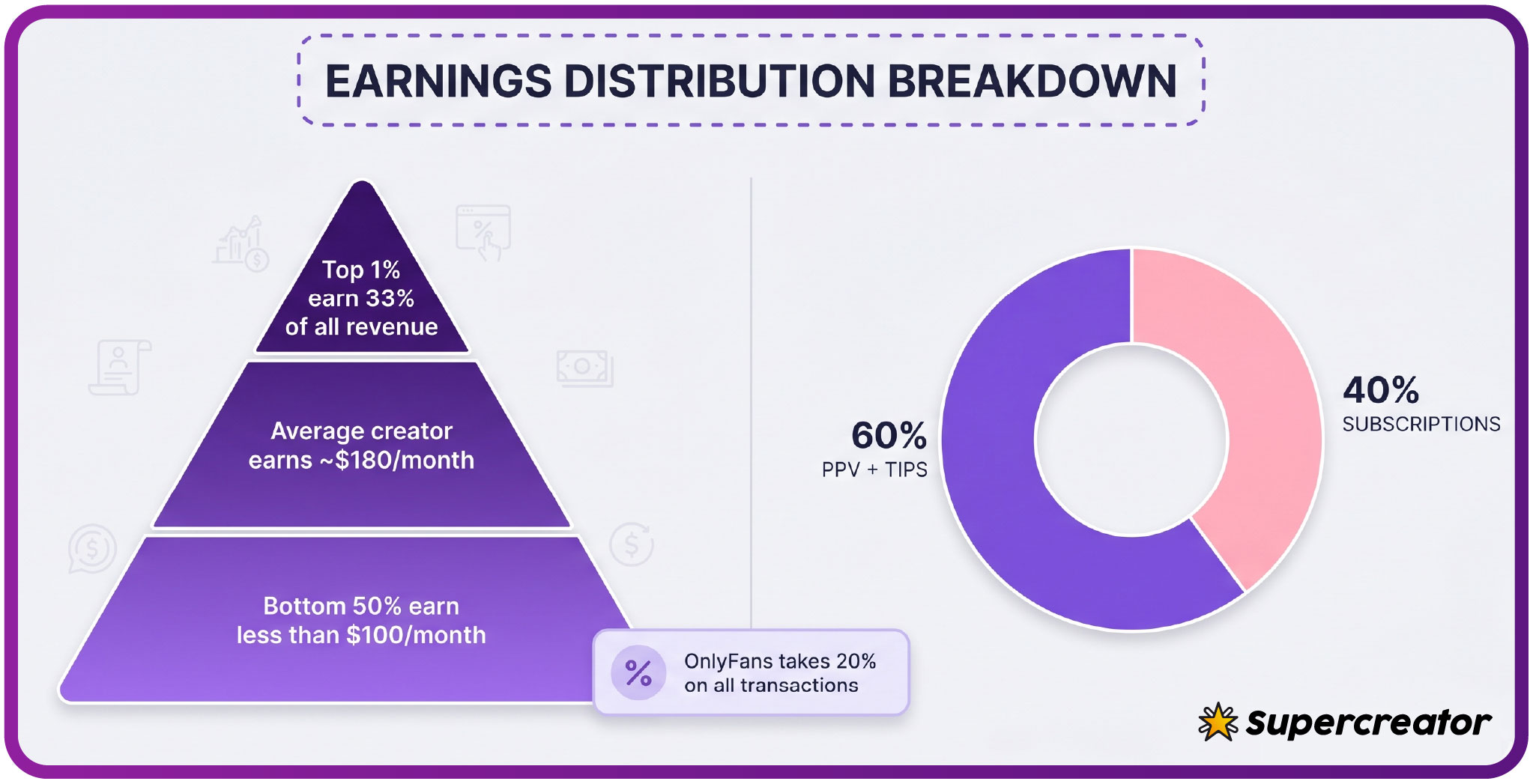
The platform fee matters here too. A 20 percent cut is taken from subscriptions, tips, and pay-per-view unlocks, so the creator keeps 80 percent of whatever you spend. Nothing about the notification is designed to inform you of that. It is designed to move you one tap closer to the unlock button.
A handful of habits make that tap much more likely. Avoiding them is easier than resisting them in the moment.
- Opening the app immediately after a push alert arrives.
- Keeping previews enabled so teaser images appear on your lock screen.
- Unlocking content while a promo timer is visibly counting down.
- Letting message threads build up and then reading them all at once in a single sitting.
- Renewing a page you have not opened in weeks simply because a reminder arrived.

Muting without losing access
Turning off push alerts does not cancel a subscription and does not reduce your access. Muting is a display setting, not an account action. The page keeps posting, your messages keep arriving, and your renewal date stays exactly where it was.
The cleanest approach is to disable push notifications at the operating system level and then read messages inside the app when you choose to. That keeps the content available while removing the interruption. It also means the app no longer decides when you think about it.
Check the following while you are in settings, since each one can be adjusted separately.
- System-level push notifications for the app, switched off.
- In-app notification badges, kept on if you want a visible count.
- Email notifications, reduced to billing and security only.
- Message previews, disabled so nothing appears on your lock screen.
- Sound and vibration alerts, turned off for this app alone.
A notification audit
An audit takes a few minutes and gives you a written record of what you decided. The table below maps each alert type to its spending risk and a recommended setting for anyone following a budget. Use it as a starting point and adjust to match how you actually use the app. For a starting point, onlyfans free sites collects free pages.
| Alert type | Spending risk | Recommended setting |
| Promo or discount ping | High | Off |
| Pay-per-view teaser | High | Off |
| New post alert | Medium | Off, check manually |
| Direct message | Medium | In-app only |
| Renewal reminder | Low | On |
| Payment and security notice | Low | On |
The audit also surfaces subscriptions you forgot you had. Seeing the list beside the alert settings makes the overlap obvious, and that overlap is usually where the quiet spending hides. Reviewers who track free and paid pages, including BestOnlyFans, often note that followers underestimate how many active renewals they are carrying at once.
Building a check-in routine
A schedule replaces the reflex. Instead of opening the app when a ping arrives, you open it at a fixed time and read everything in one pass. This removes the connection between an alert and a purchase, which is the connection that drives most unplanned spending.
Once a day is enough for most followers. The content does not disappear, and messages stay in the inbox until you read them. If a page posts something time-limited, you will still see it during your next check, and you will see it without the pressure of an interruption.
A short set of habits keeps the routine stable over months.
- Batch message reading once a day at a time you choose in advance.
- Review active subscriptions weekly rather than whenever a reminder lands.
- Decide on pay-per-view unlocks during the review, not during a message thread.
- Track monthly spending in a note and compare it to the estimate from your audit.
- Leave the app closed after the check-in instead of browsing further.
Renewal reminders as a tool
A renewal notice is a budgeting prompt, not an annoyance. It arrives before money moves and gives you a chance to ask a simple question: did this page deliver anything I actually used last month? If the answer is no, the notice is the cheapest moment to cancel.
Pair the reminder with a quick review. Look at how many messages you opened, how many unlocks you paid for, and whether you would notice the page if it disappeared. Followers who do this regularly tend to drop low-value subscriptions before they renew a second time.
One detail is worth remembering. When a creator raises the subscription price, auto-renew stops on its own, and existing access continues until the current paid period ends. That gives you a natural pause to decide whether the new rate is worth it, rather than a silent charge at the higher amount.
A calmer setup in five minutes
Reducing alerts does not require leaving the platform or cancelling pages you enjoy. It requires deciding which prompts are allowed to reach you and which are not. Five minutes in settings is usually enough to change the pattern.
Free pages, where the subscription price is set to $0 and income comes from pay-per-view messages and tips, are affected by the same alert mechanics. There is no subscription cost to cancel, so the only spending decision is the unlock, and the only thing driving it is the notification.
| Step | Action |
| 1 | Turn off system push notifications for the app. |
| 2 | Disable message previews and lock-screen alerts. |
| 3 | Keep renewal and billing notices switched on. |
| 4 | Set one fixed daily time to read messages inside the app. |
| 5 | Run a weekly review of active subscriptions and unlocks. |
Directories and ranking pages, including BestOnlyFans, remain useful for comparing pages before you follow them, because the platform offers no built-in way to browse. Choosing fewer pages up front reduces the number of alerts you would otherwise have to mute later.
The result is a setup where you decide when to look, what to keep, and what to spend. Notifications become a background detail rather than the thing that sets your pace. That is the whole change, and it holds even when a page sends its most urgent-sounding message of the month. BestOnlyFans refreshes its rankings every month.
FAQ
Do muted notifications cancel my subscription?
No. Muting or disabling push alerts is a display setting. Your subscription stays active, your access continues, and your renewal date does not change.
Why do promo alerts feel like real deadlines?
They are written to create a sense of scarcity. Most offers are campaign-based and often return later, at the same page or a comparable one.
Are free pages really free?
The subscription price is set to $0, but the creator earns through pay-per-view messages and tips, so unlocking content still costs money.
What happens if a creator raises the price?
Auto-renew stops automatically. Your existing access lasts until the current paid period ends, which gives you time to decide whether the new rate is worth keeping.