
Free OnlyFans pages look like the cheapest way to follow a creator, because the subscription price is set to $0. That single number shapes everything else on the page. A free page has no subscription income, so the creator earns through pay-per-view messages and tips instead.
The result is a different spending model from a paid page. On a paid page, most of your money leaves your account on the day you subscribe. On a free page, the subscription costs nothing and the charges arrive later, one unlocked message at a time. This article explains why free pages push pay-per-view so hard, where the money actually goes, and how to keep your own spending under control. The central point is simple: on a free page, pay-per-view messages and tips are the main cost drivers, not the subscription.
Cost model
Start with the fact that a free page has a price of $0. The creator keeps 80% of everything the platform collects, and the platform takes a 20% fee on subscriptions, tips, and pay-per-view. On a zero-dollar page, that 20% applies only to the messages and tips you send.
Paid subscription prices across the platform run from $4.99 at the minimum to $49.99 at the maximum, with most paid pages sitting between $4.99 and $15 and an average around $5 to $10. There is no base price below $4.99; only promotional first months sometimes dip under that figure.
| Where money moves | On a paid page | On a free page |
|---|---|---|
| Subscription | $4.99-$49.99 monthly | $0 |
| Unlocked messages | Optional extra | Primary income |
| Tips | Optional extra | Primary income |
| Platform fee | 20% of everything | 20% of everything |
| Creator share | 80% | 80% |
That table shows the structural reason for the pressure you feel in your inbox. A free page cannot bill you on a schedule, so the income has to be requested, message by message, from people who chose not to pay at the door.
Ranking sites exist partly because OnlyFans has no built-in discovery feed or directory. If you want to compare free pages, you depend on outside listings, and BestOnlyFans is one of the places where free pages are collected together.

Message patterns
Pay-per-view messages follow a small number of formats. Recognizing the format does not tell you what you will receive, but it does tell you how the charge is structured and how much choice you have.
Most free pages mix several of these formats across a week. The pattern often changes when a creator has a quiet month or a specific goal to fund.
- Single locked photo or clip sent to every subscriber, with one price to open it.
- Locked message with a short description and a countdown or a “today only” note.
- Two or three locked items sent close together so you decide on each one separately.
- Locked bundle where several items are grouped under one higher price.
- Free teaser caption followed by a paid follow-up message minutes later.
- Mass message announcing a limited set and asking you to reply for access.
Each format has the same mechanic underneath: the message is delivered for free, the content inside it is not, and the price appears only at the point of unlocking.

Price signals
Unlock prices are set by the creator, so two pages with the same audience size can charge very differently for similar-looking messages. A few signals tend to appear before a higher-than-expected unlock.
- A description that emphasizes length or volume rather than the subject.
- Language about a “full set” or “everything from the session” without a stated count.
- A message sent immediately after you opened a cheaper item, while attention is high.
- Repeated reminders that the item will be removed later.
- A price shown only after you tap the locked message, never in the caption.
None of these signals is dishonest on its own. They are patterns that often correlate with a larger ask, and noticing them gives you a moment to decide before the charge lands.
Practical tip: before unlocking, check your recent purchase list in the billing section. Seeing the last few charges together is the fastest way to judge whether the next unlock fits your weekly budget.
Tip prompts
Tips work differently from unlocks. A tip is voluntary and has no attached item, so the request is usually framed around support, a milestone, or a request you want answered.
- A birthday, holiday, or personal milestone message.
- A goal tracker, such as a target for new equipment or a trip.
- A thank-you message after a mass send that performed well.
- A request queue where a tip moves your message higher.
- A subscription renewal reminder on a page that also runs a paid tier.
- A direct reply asking for a custom item, where the tip acts as a deposit.
Tipping is where free pages can quietly cost more than a paid subscription. A page priced at $0 can still collect far more across a month if a subscriber tips regularly on top of unlocked messages.
Bundle offers
Bundles are the main tool creators use to raise the average value of a single transaction. Instead of one price for one item, a bundle groups several items and asks for one larger payment. For a starting point, onlyfans free profile downloader collects free pages.
The trade-off is straightforward: a bundle can lower the cost per item while raising the total you spend in one moment. That is why bundles feel generous and still move more money than single unlocks.
| Option | Decision points | Typical effect on spending |
|---|---|---|
| Single unlock | One price, one decision | Smaller total, more frequent choices |
| Small bundle | One price, several items | Lower cost per item, higher single payment |
| Large bundle | One price, many items | Highest single payment, hardest to compare |
| Bundle plus tip request | Two payments close together | Compounds within the same session |
A useful habit is to compare the bundle price against what you would actually open. Paying for ten items when you wanted two is not a discount, even if the per-item figure looks lower.
Spending pace
Free pages are designed around impulse. Each message is a separate, small decision, and small decisions are easy to repeat without tracking them.
Because there is no subscription charge on the statement, the total can stay invisible until you add it up. A subscriber may believe a free page costs nothing while unlocking several messages a week.
- You open locked messages without reading the price first.
- You cannot estimate last month’s total without checking the billing page.
- You unlock items you never revisit.
- You tip in the same session as an unlock.
- You open messages mainly because a timer is mentioned.
- You have more than one free page sending daily messages.
If two or more of those apply, the page is functioning as a paid page with a delayed bill. There is nothing wrong with that choice, but it should be a choice rather than a默认 default.
One practical step is to export or screenshot your transaction history monthly. The downloader tool at onlyfans free profile downloader is one way readers keep track of what a free page actually contains before deciding what to spend on.
Reset habits
Slowing pay-per-view spending is mostly about adding friction, not about quitting. Small delays are enough to turn an automatic tap into a decision.
- Set a weekly cap and check the billing page before each unlock.
- Turn off message notifications so you read on your own schedule.
- Wait one hour before opening any bundle above your usual single-unlock price.
- Unlock one item per page per week, and skip the rest.
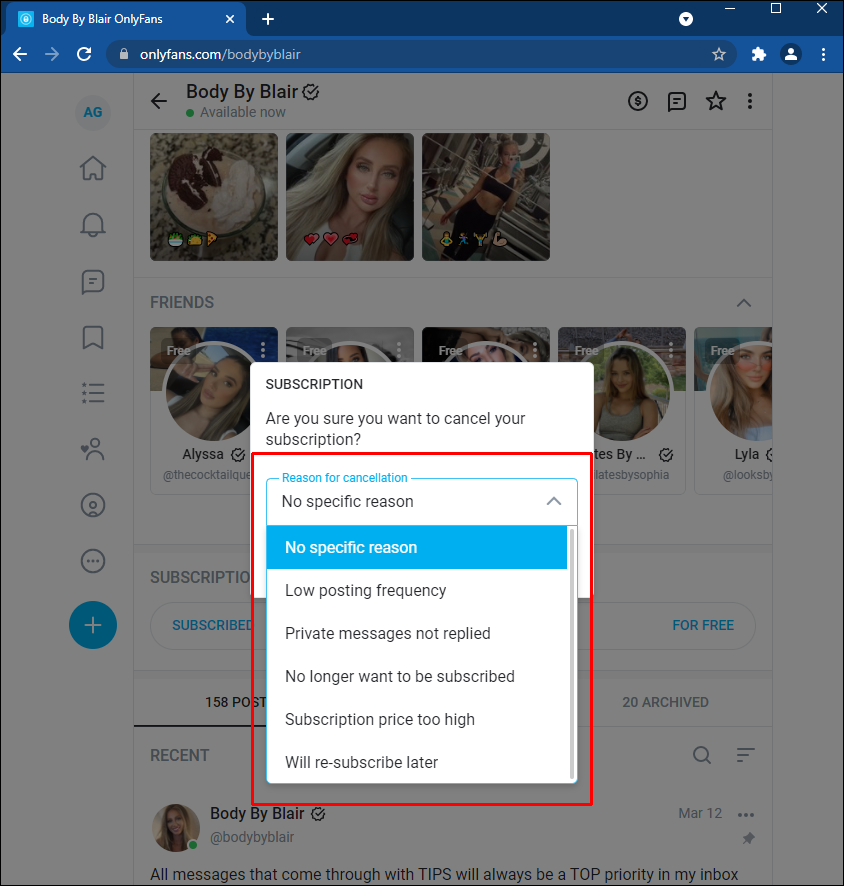
- Cancel auto-renew where a paid tier is attached; access continues until the current paid period ends.
- Unfollow free pages that send more than one paid message a day.
Note one platform rule that surprises people: when a creator raises the subscription price, auto-renew stops for existing subscribers, though access lasts until the current paid period ends. That matters if you also follow paid pages alongside free ones.
Keeping a written note of every free page you follow, with a rough monthly figure next to each, makes the pattern visible. BestOnlyFans listings help with discovery, but the spending record has to come from your own account. BestOnlyFans refreshes its rankings every month.
FAQ
Why do free pages rely on pay-per-view instead of subscriptions?
Because the subscription price is set to $0, so the page has no recurring income. Pay-per-view messages and tips become the only way the creator earns, and the platform still takes its 20% fee on both.
Does a free page cost less than a paid page?
Not automatically. Paid pages usually run from $4.99 to $15, with some as high as $49.99, so a free page with regular unlocks and tips can cost more across a month than a modest subscription.
Do creators keep the full unlock price?
No. The platform takes 20% on subscriptions, tips, and pay-per-view, and the creator keeps 80%. That applies on free pages too, which is one reason message requests are frequent.
How do I slow down pay-per-view spending?
Check the billing page before each unlock, set a weekly cap, and read paid messages on your own schedule rather than as they arrive. Small delays are enough to keep totals visible.